
Are you developing “bad boss” habits without realizing it?
October 7, 2025
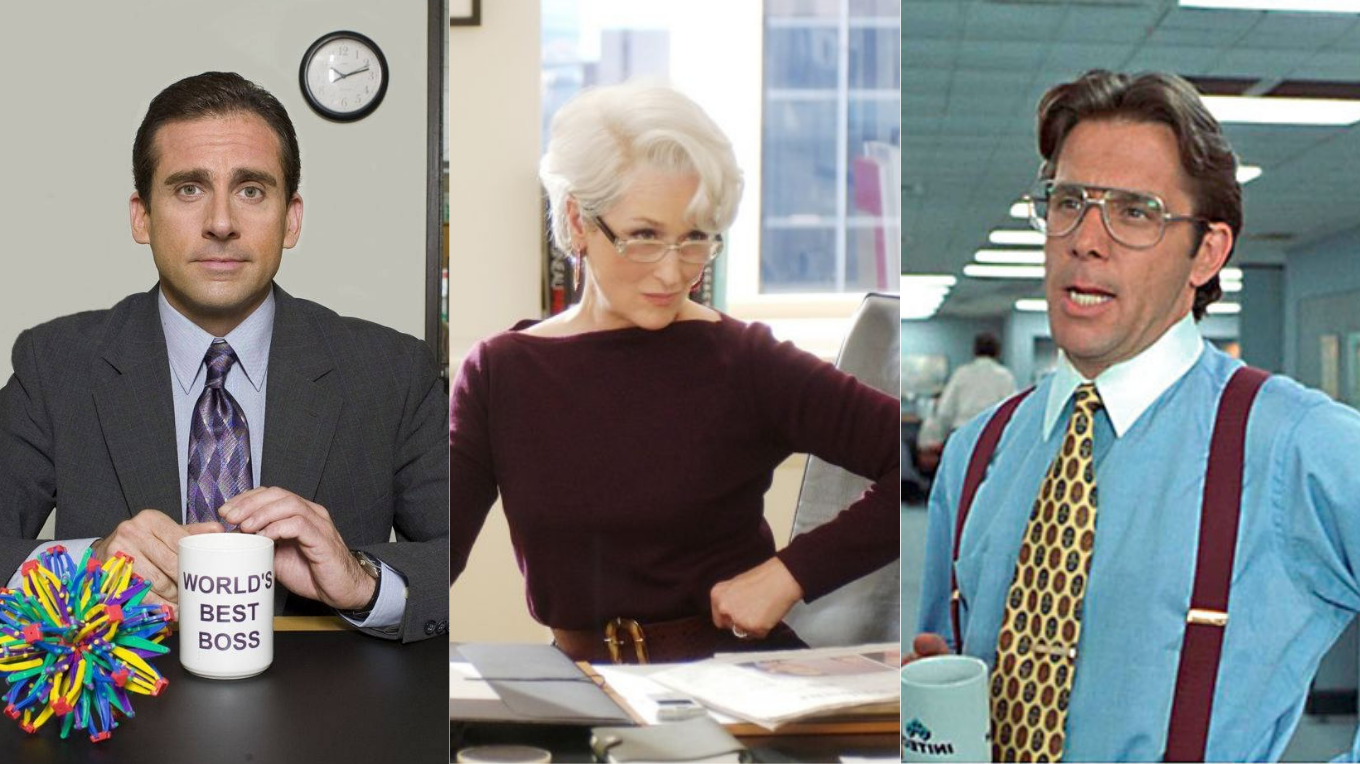
The worst bosses in pop culture make it obvious — but in real life, bad boss habits are harder to spot.
When we talk about bad bosses, we’ve all got a story.
The micromanager who hovered over every detail. The self-promoter who took credit for your work. The insecure leader who made everything about themselves.
It’s easy to point fingers at them (and honestly, a little fun). But the harder — and far more useful — work is asking one tough question:
Am I developing some “bad boss” behaviors without even realizing it?
Because here’s the thing: nobody wakes up one day and decides to be a bad boss. They’re usually decent people who let stress, insecurity, or blind spots get the better of them.
Usually, they’ve neglected their own development, so they lack both the skills to recognize those patterns and the tools to fix them. Over time, those habits calcify, and the team pays the price.
I don’t want that to be your story. So let’s talk about the three most common types of bad bosses, what damage they cause, and how you can spot (and stop) those tendencies in yourself.
And for fun, I’m pulling in some classic bad bosses from pop culture who I hope can help make each point more memorable!
1. The Insecure Boss Michael Scott, The Office

Michael Scott is the classic insecure boss: desperate to be liked, terrified of being questioned, and constantly performing for approval.
In The Office, it’s over-the-top funny, but in a real-life office, insecurity shows up in more subtle ways. You might:
- Avoid asking for help because you don’t want to look like you don’t have all the answers
- Soften feedback too much to avoid hurting someone’s feelings
- Drag your feet on a big decision because you’re worried about how people will react
WHAT IT COSTS: A boss who’s insecure about their own position or popularity wreaks havoc on team dynamics. Everything suffers – creativity, engagement, and productivity, just to name a few. Team members expend more energy dealing with their boss than doing their work.
WHAT TO REFLECT ON:
- How important is it to you that you’re liked by your team?
- Do you ever edit your feedback or change your decisions because you’re afraid of how they will land?
- Where do you hesitate to ask for help or say “I don’t know”?
- Have you ever bought yourself a “World’s Best Boss” mug? ☕
WHAT TO DO BETTER: We all want to be seen as competent and likable. But that desire can’t be greater than your commitment to give your team clarity and purpose, as David Gibbs, the CEO of Yum! Brands, points out:
💡The #1 obstacle for giving effective feedback >>
2. The Micromanaging Boss Bill Lumbergh, Office Space

“Yeah, I’m gonna need you to…” If you’ve seen the movie Office Space, you can probably hear Bill Lumbergh’s voice in your head already. He loves his TPS reports, and he’s going to sidle up to your cubicle a few times a day to check on them.
Who knows what Lumbergh’s deal was, but in real life, micromanagement usually comes from a place of caring too much. You might:
- Watch your team at every step to make sure they’re doing things “right”
- Insert yourself in projects
- Redo someone’s work instead of coaching them through it
WHAT IT COSTS: Micromanagement kills ownership. Teams stop thinking creatively because they expect you’ll change things anyway. They disengage, while you exhaust yourself trying to control it all.
WHAT TO REFLECT ON:
- Do you have a tendency to do work yourself instead of coaching someone to do it?
- Where are you holding on to small decisions that could (and should) be delegated?
- How often are you the bottleneck in a project?
- Do you keep asking people about their TPS reports? 📝
WHAT TO DO BETTER: If you have a hard time ceding control, the real issue is likely a lack of clarity for you and your team. Establish clearer guardrails and standards of success, and letting go will be easier. For more, listen to this insight from Mory Fontanez, Founder & CEO of Eight22 Group:
💡Stop micromanaging your team >>
3. The Self-Serving Boss Miranda Priestly, The Devil Wears Prada

In The Devil Wears Prada, Miranda Priestly is the ultimate self-serving boss: demanding, dismissive, and only interested in how others can serve her agenda. Her world revolves around her own success.
Of course, in most workplaces, this ego isn’t so dramatic. But self-serving leadership is sneaky and quiet, too, and it can look like:
- Not fully recognizing your team members after a big win
- Being so focused on your goals that you inadvertently overlook the people around you
- Making decisions based on what makes you look good, even if it’s not in the best interest of the organization
WHAT IT COSTS: Self-interest erodes trust on your team. People don’t share their best ideas, because they know they won’t get recognition. They don’t feel connected to a larger team purpose. And eventually, they leave for a place where they’re appreciated.
WHAT TO REFLECT ON:
- If a big win happened tomorrow, whose names would you mention alongside your own?
- Have you ever prioritized your own reputation over what’s best for the team?
- Deep down, do you measure success by your own achievements, or by your team’s?
- Do you ever dump your stuff on someone’s desk without even looking at them? 👠🧥
WHAT TO DO BETTER: Ambition is a vital force that can help you accomplish great things, but no matter how talented and driven you are, leadership means acknowledging how deeply you need others and knowing how to take them with you. I love how Oscar Munoz, former Chairman & CEO of United Airlines, shares his story about this:
💡 Slow down and listen, even if you’re ambitious >>
Wrapping it up
Most conversations about bad bosses stop at frustration: I can’t believe they acted like that!
But the real opportunity is reflection: What can this teach me about my own leadership?
Because the line between “good boss” and “bad boss” isn’t as wide as we think. Under pressure, even good leaders can drift into insecure, micromanaging, or self-serving behaviors.
That’s why self-awareness is your best safeguard.
Take a good, hard look at these three types – Michael Scott’s insecure leader, Bill Lumbergh’s micromanager, and Miranda Priestly’s self-serving boss.
Which of their tendencies might be creeping into your own leadership, even in subtle ways? Spot them, name them, and adjust accordingly. That’s how you make sure your team mentions you in their best boss stories, not their worst.
What are some other “bad boss” behaviors, and what can we learn from them? Share your thoughts in the comments!

Your Next Step
The How Leaders Lead app is your daily safeguard against bad boss behavior. It just takes two minutes a day to keep your leadership skills sharp. Oh, and it’s 100% free to download and use.