
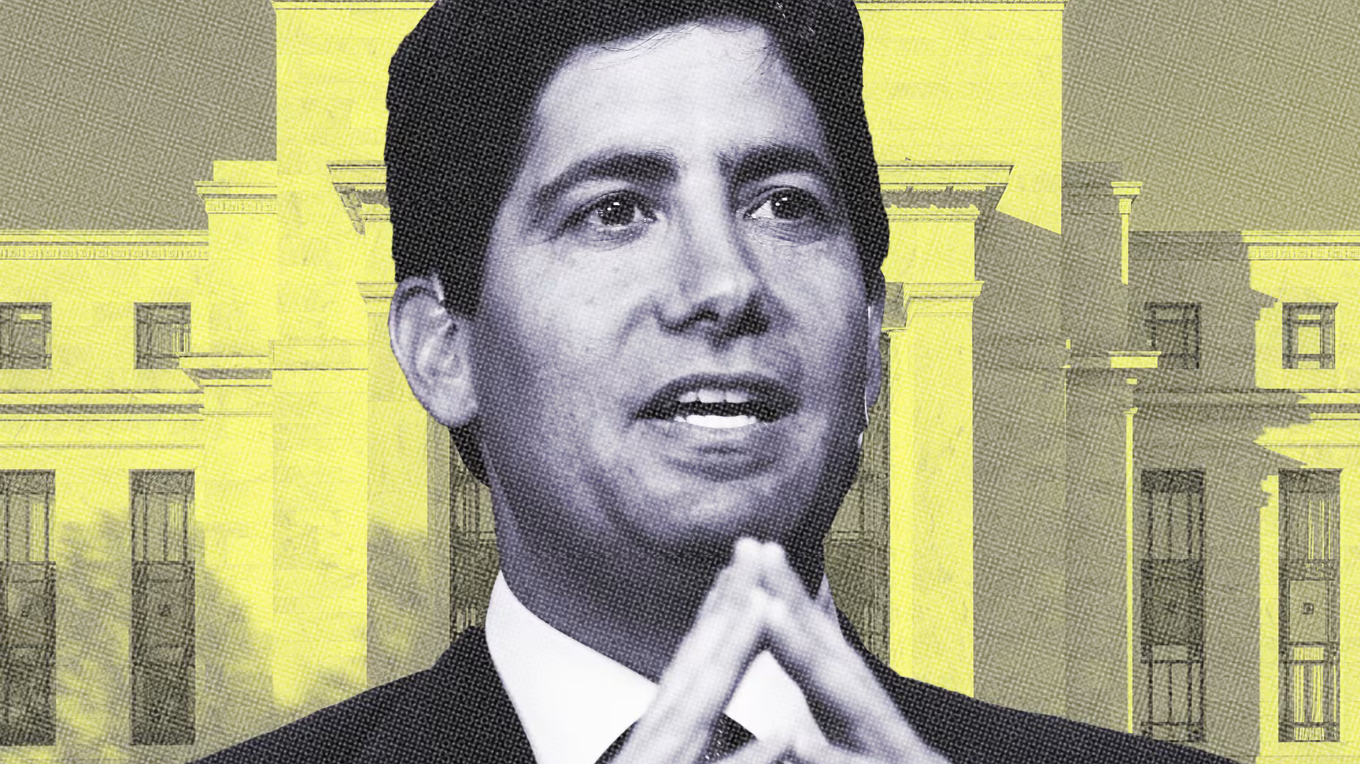
Here’s how the newly nominated Fed Chair learned to lead through crisis—and how you can, too
In 2008, Kevin Warsh sat in Ben Bernanke’s inner circle as the global financial system teetered on the edge of a disaster.
Markets were frozen. Banks were failing. And the decisions he was about to make would determine what would happen next in the global financial system.
No pressure, right?
Kevin was just 35 years old at the time—the youngest person ever appointed to the Federal Reserve Board.
If you’ve been following the headlines, you know that Kevin Warsh has been nominated as the next Chair of the Federal Reserve. And with markets on edge and inflation still a major concern, the stakes for this leadership role have never been higher.
When I sat down with Kevin Warsh in 2023 for How Leaders Lead, one thing struck me: this is a guy who knows how to learn from others, make good decisions, and help people move forward even when the path isn’t clear.
Those are foundations for any great leader. So I wanted to take a closer look at his leadership style and show you three lessons from Kevin’s playbook that will help you lead with more clarity and conviction, especially when the stakes are high.
1. Learn from every leader around you—good and bad
Key quote: “You see leaders around you, and when they have qualities you admire, you steal from them.”
Throughout our conversation, Kevin emphasized what he’s learned from others. He keeps his antenna up, always scanning for lessons from the people and situations around him.
That was especially true in his time at Morgan Stanley, where he told me he had the privilege of working for some incredible bosses—and some not-so-great ones, too.
It’s natural to learn from a good boss. It comes easy. But it’s just as important to learn from your bad bosses. And Kevin was intentional about learning from everyone.
The good bosses showed him what great leadership looks like. The difficult ones showed him exactly what to avoid.
He didn’t wait for the perfect mentor. He studied everyone around him—picking up skills, observing behaviors, and making conscious choices about what kind of leader he wanted to become.
The takeaway:You can learn leadership from anywhere. It’s something you observe, absorb, and practice.
And yes, we should all strive to find great mentors. But you don’t have to play the victim if you have a bad boss. Start paying attention to every leader in your orbit—the great ones, the okay ones, and the bad ones.
Reflect: What’s one habit from a great leader you admire that you could start practicing this week? And what’s one behavior you’ve seen that you never want to repeat?
2. Your conviction matters as much as your decision
Key quote: “The most important thing is to make sure you look like you know what you’re doing.”
When Kevin was nominated to the Federal Reserve Board at the tender age of 35, a senior senator wanted to hear what Paul Volcker thought about the young nominee.
Paul Volcker was the legendary Fed Chair who tamed inflation in the 1970s and one of Kevin’s heroes. And suddenly, Kevin found himself on a plane going to meet him.
He expected a deep dive into monetary policy and economic theory. Instead, Volcker gave him this advice: “When you’re a governor at the Federal Reserve, probably the most important thing is to make sure you look like you know what you’re doing.”
Volcker was making a crucial point: Big decisions aren’t just about the decision itself. They’re also about displaying conviction.
Leaders cast a shadow, and people are watching you. They’re looking to you for clues and asking themselves: Does this person have a plan? Do they believe in the path forward?
Your confidence becomes part of the decision itself. If you seem uncertain, your team will hesitate. If you project conviction, they’ll follow.
The takeaway: How you show up matters just as much as what you decide. Your conviction gives your team the confidence they need to execute.
That doesn’t mean faking it or being arrogant. It means projecting a seriousness of purpose that shows you’ve thought this through and you’re committed to moving forward.
Reflect: Think about a recent decision you made. On a scale of 1-10, how much conviction did you project when you announced it?
3. Debate hard in private, then unite in public
Key quote: “We were better off fighting out each other’s views in private, so that in the darkest, most fragile days of the US economy, we spoke with one single voice.”
When the 2008 financial crisis hit, then-Fed-Chair Ben Bernanke turned to his team to navigate it together.
And as Kevin told me, they disagreed on nearly everything.
You might think that’s a recipe for disaster, but under the right leadership, it’s actually a good thing.
Those varying opinions created a healthy debate and helped them reach better, more nuanced decisions. It gave everyone a chance to be heard.
Then, once Ben made the decision, Kevin told me, “the rest of us would salute and support the proposition we put forward, even if we had a lot of internal disagreements.”
In the darkest days of the crisis, they presented a united front. Because the last thing the country needed was mixed messages from the people steering the ship.
This is what I call “team together, team apart.”
Team together means you bring people into the room, ask what they think, and let everyone give their input. That involvement creates commitment to the cause.
Team apart means once you leave that room, you execute the decision—even if you didn’t fully agree with it.
The takeaway: Healthy debate makes decisions stronger. But public division makes teams weaker. Create space for your team to challenge you. But once the decision is made, everyone needs to support it and work together to execute it.
Reflect: Do you give your team real permission to disagree? And what happens in your organization after a decision is made—does everyone commit, or does the debate continue in the hallways?
Wrapping it up
Kevin Warsh has spent his entire career learning from the leaders around him, projecting conviction when it matters most, and building teams that can weather any storm.
And while most of us won’t be setting interest rates, we can all apply these three lessons:
- Study every leader around you—good and bad
- Lead with conviction, especially when you don’t have all the answers
- Debate hard in private, then unite in public
In times of uncertainty, whether you’re leading a company or a country, those leadership principles will serve you well.
There are more leadership lessons to learn from Kevin Warsh, and I strongly encourage you to make time for our full conversation. You can listen wherever you get your podcasts.
But in the meantime, let’s hear YOUR thoughts! Which of these leadership takeaways resonates most with you? Drop a comment and let me know.
Oh, and if you like these “leadership playbooks,” don’t miss my earlier editions featuring Jamie Dimon (CEO of Chase), Amazon CEO Andy Jassy (CEO of Amazon), and Whitney Wolfe Herd (Founder & CEO of Bumble).