
Here’s how one of America’s greatest soccer players leads – and what you can learn from it
The World Cup is in full swing! And for the first time in 32 years, the United States is hosting the world’s biggest sporting event on home soil.
Nobody understands what this moment means better than Landon Donovan.
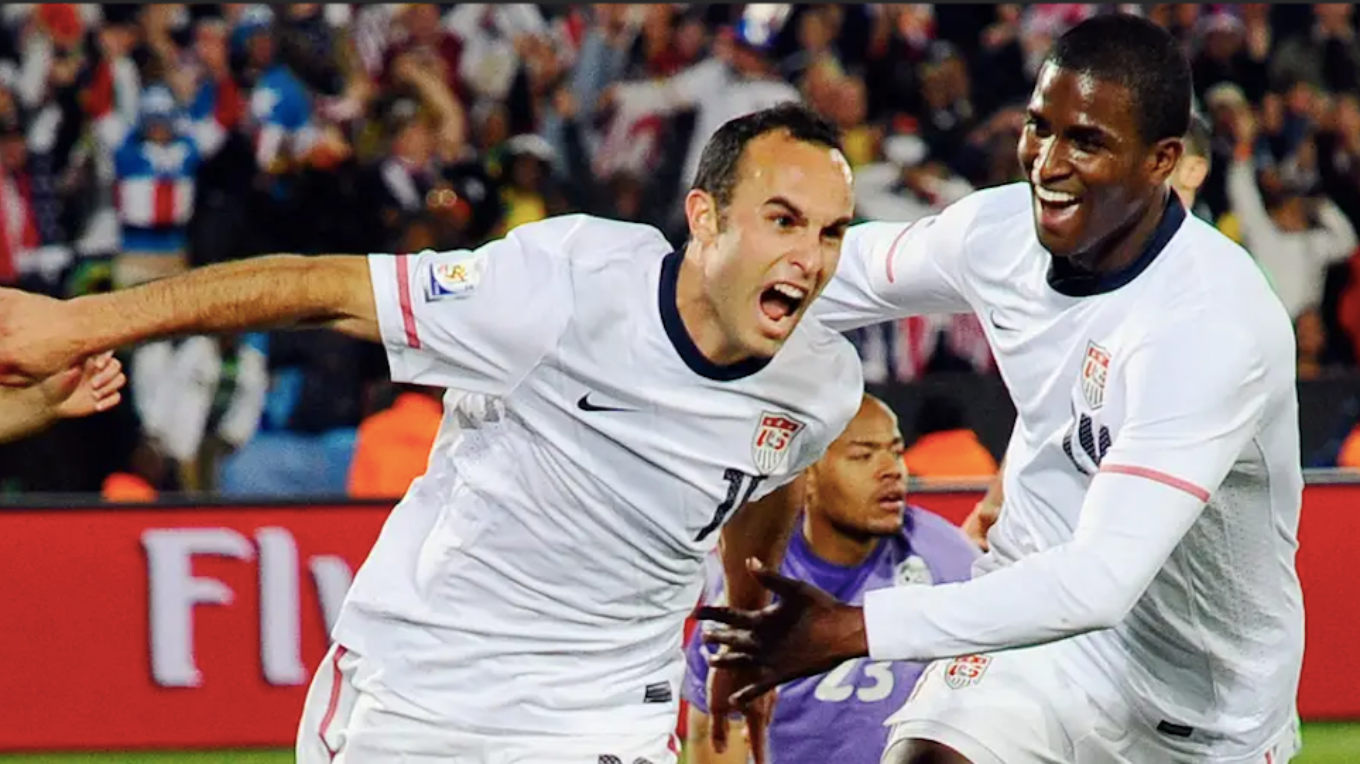
Regarded by many as the greatest men’s soccer player in US history, Landon played in three World Cups, scoring one of the most iconic goals in American soccer history in the 2010 tournament:
But as impressive as his sporting accomplishments are, what really stands out to me about Landon is how he’s reflected on it all—and what he’s learned about leadership along the way.
I sat down with Landon recently on How Leaders Lead, and the conversation was one of the most honest and self-aware I’ve had in nearly 300 episodes. In fact, it’s one of those conversations that could change the trajectory of your whole life if you hear it at the right time.
I highly encourage you to watch it here (or listen on your favorite podcast app). But in the meantime, here are three lessons from our conversation that will make you a better, more grounded leader.
1. Understand how YOU lead—and lean into it

Very few coaches would hand the captain’s armband to a 22-year-old, but that’s exactly what Bruce Arena gave Landon in 2004 before a hostile World Cup qualifier in El Salvador. Landon rose to the occasion, playing brilliantly and leading the team to victory.
In the next training camp, Landon assumed his new leadership role meant being the guy yelling, motivating, and talking to his teammates. And his performance suffered as a result. When his coach asked what was wrong, Landon said he was trying to be a leader.
But Bruce reminded him: “You don’t have to talk to be a leader. You just have to do your job really well, and everyone’s going to follow you.”
Landon’s most effective leadership came from what he did, not what he said. More importantly, he didn’t have to pretend to be a different kind of leader than he really was.
As Landon told me: “Being authentic to who you are is how you lead. If you are naturally a motivator and a talker and an inspirer, that’s great. But that was not me. I lead by the way I play.”
The takeaway: There’s no one way to be a great leader. Understand your own style and lean into it instead of performing as the kind of leader you think you should be. When you lead from your authentic strengths, your team feels it. And they follow.
Reflect: Are you leading in a way that’s authentic to who you are, or are you performing a version of leadership you think you’re supposed to?
2. Separate what you do from who you are

Landon came to the 2006 World Cup riding high—he’d been named the best young player in 2002, and his entire sense of identity was wrapped up in those expectations.
But the US was eliminated in the group stage. Landon played, in his own words, “three of the worst games of my career.” Public criticism followed, and he fell into a deep depression. For the first time, he had to ask himself whether he even wanted to keep playing.
“I was so wrapped up in my identity as a soccer player that I had to succeed,” he said. “And when I didn’t, my whole world fell apart.”
But through therapy, he discovered something crucial: no matter how much you love what you do, you can’t let it define who you are. With that insight, he was able to untangle his performance and skill as a player from his identity and worth as a person.
As he told me: “I became much more at peace off the field, and that really helped my performance on the field.”
Four years later, he returned to the World Cup and scored that goal against Algeria.
The takeaway:When your identity is entirely wrapped up in your role, setbacks feel personal and can often unmoor you. Yes, you have to bring your own self to your job, but you can’t lose yourself in it. Learn to separate who you are from what you do, so you can learn from failure instead of being crushed by it.
Reflect: How much of your self-worth is tied to your title, your performance, or your results? What happens to your mindset and sense of identity when things don’t go your way?
3. Take a stand for your culture—even when it costs you

After his extraordinary playing career was over, Landon stepped into a coaching role for the San Diego Loyal.
The team was winning, but one of their best players was being played out of position. His frustration about it was showing up on the field.
After the player’s poor defending resulted in the team conceding a goal, Landon called him out for it in a team film session.
The player pushed back – hard – and told Landon he wanted to be traded. Landon and the team owner took the next steps to cut him loose, only for the player to come back and ask to stay.
But Landon said no – because for him, the cultural standards were more important than one player’s talent.
As he reflected: “If you’re willing to cut one of your best players because they’re not doing what they should be doing, the rest of the group pays attention.”
The takeaway:It’s one thing to know your core values and develop them in your people. But if you really want them to mean something, you have to hold people accountable to them. Every time you let a standard slide to avoid a difficult moment, you’re sending a message. And your team is listening. The leaders who build the strongest cultures are the ones willing to protect it, even when it’s costly.
Reflect: When you look at your team, is there a situation where you’ve been avoiding a difficult conversation to keep the peace? What message is that silence sending?
—
Landon has done so much for soccer in the United States. But that may not be his greatest legacy. When you hear him talk about his leadership journey, especially around mental health, it’s clear that he’s impacting people on a bigger level.
I hope Landon Donovan’s leadership journey can help you lean into your own strengths as a leader, understand yourself more fully, and make tough decisions even when they’re costly.
Which of these lessons from his playbook resonates most with you? Drop me a comment and tell me that – plus who you’re rooting for in the World Cup!