
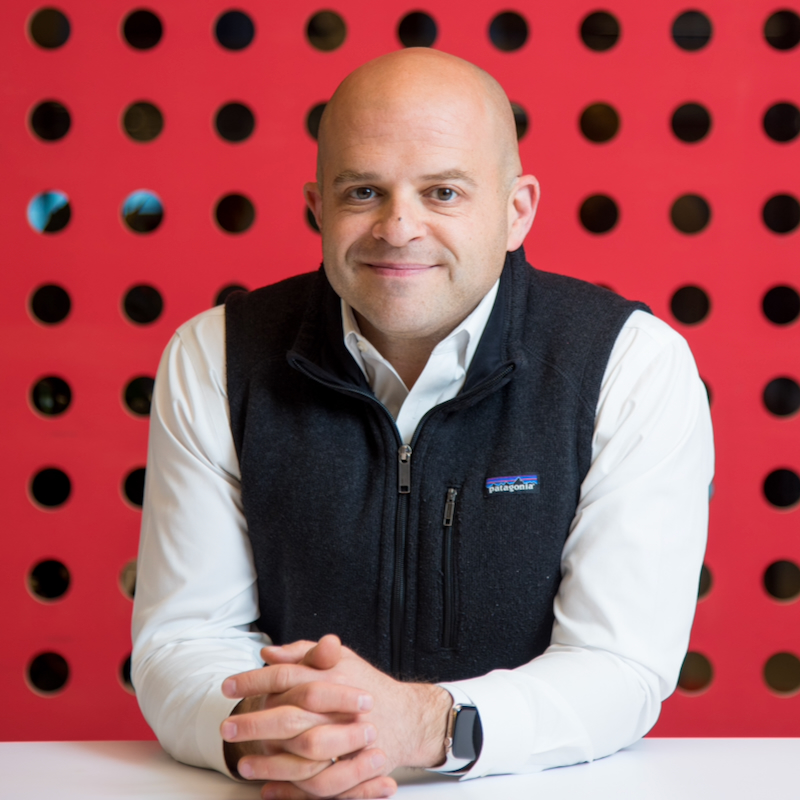
Jeff Lawson
Dig for Problems and Then Solve Them
Today’s guest is Jeff Lawson, the co-founder & CEO of Twilio, one of the world’s fastest growing technology companies. Millions of software developers use their platform to add communications to apps and websites we all use, like airbnb and Lyft.
Jeff has a unique point of view as an entrepreneur. He has a foot in both the technical developer world AND the executive world. So if you need to make your business more digital or get more from your technical talent, then his perspective is going to be invaluable to you.
But he may also challenge you a bit. So often in business we get wrapped up in our solutions – features, shiny products, sales roll-outs, and all that good stuff.
But in all our obsession over the solution, we often overlook the problem.
What huge unsolved issue is out there that customers are struggling with every day? Jeff says THAT’S what we should all be looking for. And if you want to find it, this conversation is a great place to start.
You’ll also learn:
- Two things you can take away from any startup experience, even if it doesn’t work out
- How to structure teams so even big companies can stay agile and innovative
- One often-overlooked insight to getting the most out of your technical talent
- How to inject accountability and leadership at every level of your organization
Take your learning further. Get proven leadership advice from these (free!) resources:
The How Leaders Lead App: A vast library of 90-second leadership lessons to stay sharp on the go
Daily Insight Emails: One small (but powerful!) leadership principle to focus on each day
Whichever you choose, you can be sure you’ll get the trusted leadership advice you need to advance your career, develop your team, and grow your business.
More from Jeff Lawson
Get daily insights delivered straight to your inbox every morning
Clips
-
No one can take away your wisdom or your word
 Jeff LawsonTwilio, Cofounder and former CEO
 -
Maintain startup intensity as you scale
Jeff LawsonTwilio, Cofounder and former CEO
-
Follow your customers, not your investors
Jeff LawsonTwilio, Cofounder and former CEO
-
Know the problem you’re solving
Jeff LawsonTwilio, Cofounder and former CEO
-
Tap your software developers’ creativity
Jeff LawsonTwilio, Cofounder and former CEO
-
Interrogate the problem you’re solving
Jeff LawsonTwilio, Cofounder and former CEO
-
Don’t buy into the sales vs. product dichotomy
Jeff LawsonTwilio, Cofounder and former CEO
-
Close the gap between deciders and doers
Jeff LawsonTwilio, Cofounder and former CEO
-
Be present for whatever you’re doing
Jeff LawsonTwilio, Cofounder and former CEO
Explore more topical advice from the world’s top leaders in the How Leaders Lead App


Transcript
David Novak 0:04
Welcome to How leaders lead where every week you get to listen in while I interview some of the very best leaders in the world, I break down the key learning so that by the end of the episode, you'll have something simple, you can apply as you develop into a better leader. That's what this podcast is all about everybody. Now, today's guest is Jeff Lawson, the co founder and CEO of Twilio, one of the world's fastest growing technology companies, millions of software developers use their platform to add communications to apps and websites we all use. I'm talking about companies like Airbnb and Lyft. And, you know, I love just point of view as an entrepreneur. See, he has a foot in both the technical development world and the executive world. So if you need to make your business more digital or get more from your technical talent, then his perspective today is going to be invaluable to you. But I gotta be honest, he may also challenge you a bit. So often in business, we get wrapped up in our solutions, you know, features and shiny products, and sales rollouts, and all that good stuff. But in all our obsession over the solution we offer, we often overlook the problem, what huge unsolved problems our customers out there struggling with every day, Jeff says, that's what we should be looking for those big problems that our customers are facing every day, and this conversation will inspire you to go out and find it. So buckle up, because here's my conversation with my good friend, and soon to be yours,
Unknown Speaker 1:39
Jeff Lawson.
David Novak 1:45
Jeff, thanks so much for being with me on this conversation.
Jeff Lawson 1:48
Thank you, David. It's great to be here.
David Novak 1:50
You know, Jeff, I just finished reading your new book, ask your developer how to harness the power of software developers in win in the 21st century. That's a pretty lofty title with a big promise. But I have to tell you, I wish I would have had this book to read when I was coming up in business and as a CEO, and I actually think it's a must read for every aspiring leader. And I don't I don't really plug books on his show. But I think this is really a good one. Why did you write it?
Jeff Lawson 2:19
Oh, well, thank you so much, David, I appreciate it. You know, I wrote the book. Because, look, every company is becoming a software company. That's because the experiences that companies have with their customers is increasingly a digital one. And in this world, where mobile apps and websites and web applications like that's how you differentiate yourself, that's how customers see you think about banks used to be 20 years ago, you'd like to bank because you walked in the door, there was enough parking, and there was a recent paint job on the bank and the teller was friendly, and they gave your kid a lollipop. You said, Okay, I like my bank. Nowadays, what's your bank, it's a mobile app. And you like your bank, if the mobile app works? Well, if it's fast, if it doesn't crash, if it's got features and functionality that's making your life a little bit easier, and they keep innovating for you. And so digital is taking over every industry that requires every company to get good at building software that differentiates them in the eyes of their customers. But here's the interesting thing like that is not necessarily news. You know, a lot has been written about digital transformation and all this stuff, right. But What surprises me is the very little has been said about the actual people who are making those digital transformations happen software developers. And when I talk to a lot of business executives, what I find is that they don't really know how developers do their jobs. They don't know what developers are all about what goes on over there in the world of software development. But increasingly, it's critical for the software developers to be able to do their best work in order for companies to succeed in the digital economy. And I realized that there was this opportunity, because I am a software developer, but I'm also now the CEO of a public company. And so I've got a foot in both worlds, I understand how developers think I understand the process of creation, creating great software and great digital experiences, but also know how executives think and what motivates executives and like what's on their minds. And so I wrote the book to bridge the gap between executives, and the goals and the motivations that business leaders have, and the technical talent that they are increasingly reliant upon, in order to execute and to build great products and great companies in this digital era. And I wrote the book for the business executives, because I wanted the business executives to basically understand more about what software developers do and what you can expect from them because software developers are creative problem solvers. They're not just code monkeys you know, there's like this idea of a black box where like you know, product requirements and Mountain Dew go in one end and out the other end comes you know, code Well, I
David Novak 4:51
sold a lot of Mountain Dew in my day, by the way, I sold a lot of that mountain dew
Jeff Lawson 4:54
developers do do have a taste for Mountain Dew I will minute
David Novak 4:58
you had that's because you got to stay up All night, you know, caffeine works for you, you know, but I have to tell you, you know, that's why I like reading the book. Because, you know, I think you do kind of have that blackbox mentality when you think about technology, and a lot of CEOs are really not that good at it. And a lot of executives need some coaching. And you provide a lot of it. And I want to come back to the many of the leadership things you talk about in the book. But first, Jeff, could you tell us about your upbringing and give us a story from your childhood that helped shape shape the kind of leader you are today?
Jeff Lawson 5:31
Absolutely. You know, in my childhood, I definitely did a lot of building and at the time, you know, I, my 40s. And so I was growing up in the 80s. And I remember when I was very young, yeah, maybe four or five years old? Yeah, my dad was radiologist. And so he would bring cardboard home from the hospital because they shipped X rays with cardboard, and you always bring it home, and we do these projects, and I'd make a and make a TV set, or a VCR or robot out of cardboard, you know, with markers I draw the buttons on and, you know, I'd use scissors to cut out the hole or whatever, then when I was all done with it, I would look at it and I'd say okay, now Dad, can we make it really work. And of course, this was something that was like made out of you know, markers and tape and cardboard, it wasn't a real VCR or whatever it my dad was. Right. And then along came computers, I got my first computer, I was an apple two either my parents got for our family in the early 80s. And suddenly, here's this machine where you could, you know, write some code, and it kind of really worked. And you could tell the computer to do all sorts of interesting things, and it would do them. And so I was kind of smitten with this idea that like I get to tell I'm a you know, eight year old or whatever, and I get to tell this computer what to do, and it'll do it. That's pretty amazing. But the challenge at the time was you could write software, on a computer, and like you'd throw it off to your parents or maybe your friends when they came over to play. And they'd be like, Oh, that's neat, right? But there's nothing you could really do with it. And it wasn't until the internet came along. And I started college in 1995 is when I started my freshman year. And I remember the most exciting thing to me starting college and a lot of people was like, oh, you know, drinking or partying or you know, you know, sexual encounters. And for me, I was like, ethernet jack? Is my door, right? Yeah, 10 megabit ethernet, which is a far cry from like the, you know, the 28, eight dial up modem I had at home. And the internet was this amazing thing, because now not only could you write programs for a computer, be an audience of at that point, millions of people could use the thing that you built. And now that millions has turned into billions of people. And I don't think that humanity has seen a medium, which is like software code and the Internet as a distribution vehicle. We have not seen a creative medium like this in the history of humanity, where someone can sit at a computer type some magical codes into a text editor. And billions of people overnight, can be using that thing and enjoying it. And you can build a business you can do it for for pleasure for art for any reason you think but we've never had the ability to create something that billions of people can consume at that scale. And that is just amazing. Speaking of
David Novak 8:11
building the business, you're you're you've been a serial entrepreneur, and it actually started in college. And you've, you've started four companies. Tell us about the first one you started while you're in college and the biggest leadership takeaway you get you got from that?
Jeff Lawson 8:27
Well, you know, my first company, I started when I was in college, because I wanted an excuse to play around with this thing called the internet. And, you know, I've always thought that the best way to just dive into some new field, whether it's a technology or a new skill you want to learn, at least for myself has been to just commit to building something with other people. And so you know, started this business say, Okay, let's let's start a business as this excuse to go figure out this whole internet thing. And being college students, we looked around, and I was at the University of Michigan, there were all these companies on campus that were basically little, the coffee shops, like the little local Kinkos. And what they did is they would hire note takers in the classes. And then you could go into the coffee shop, and you could buy a xerox copy of the lecture notes for your courses as a study. And we saw this little cottage industry, right and was on every college campus. And so wouldn't be interesting. just distribute those via the internet. Instead of having to walk through I was in Michigan, like through the snow in the middle of winter, to go pick up a set of lecture notes to say, Well, yeah, what if you could just download them from the internet? And you know, we did a quick analysis of the whole industry and we decided that the whole industry was about $10 million of revenue. So we said, okay, let's just start we'll just give them away for free and we'll just see what what what adds on it, you know, because everything's about eyeballs back then, in the.com era. And so we started this business called the first name of it was notes number for free.com. And I love this because we registered the domain in 1997. I think we could have had it we could have had google.com Right? And we picked notes no Number for free.com, later renamed to diversity, and we gave away lecture notes. And we went from the one campus to the seven campuses to 50 to 200 campuses, we ended up raising a bunch of venture capital and, and scaling it out and moving the company from from Michigan to Silicon Valley, and reaching millions of college students on a weekly basis with free educational tools for college students. And yes, what my biggest learning was, so this was a very typical.com roller coaster ride. Yeah, we started in the dorm room, raised venture capital, scaled up to millions sold the company for hundreds of millions. And the company that acquired us went bankrupt, when the market crashed, and we got nothing, right. So like, and that all happened in the course of 18 months. But you learned a lot you learn. Exactly, exactly. And so I had no regrets at all about it. And you know, the amazing thing to me was like, our investors, were just immediately like, Wait, we'll fund whatever you do next. And I was astounded. I was like, 22 years old, I was like, Are you mad that we like lost all this money? They're like, No, no, you know, great entrepreneurs, you did what you said, you were gonna do, you know, the market didn't work out, we got it. But let us know your next idea. And we'll happily fund you. And I was amazed by that. And one of the things that I realized was, you know, life is full of these experiences. And you know, you never know when any particular opportunity is going to work out or not. But the two things that no one can ever take away from you. is number one, your knowledge, the things in your brain, what did you learn along the way. And number two, your word, you know, if you acted responsibly, despite the fact that it didn't work out financially, people will trust you. And they'll create more opportunities for you down the road. So the things that you do to invest in yourself whether or not they work out as a business or anything else. If they're growing your knowledge, and you're growing your relationships, you know, it'll work out in the end,
David Novak 11:52
even so, you know, use this knowledge that you gained, you go on to help startup and found you're the founding Chief Technical Officer for StubHub, online ticketing. What was your key learning from that experience? That had to be some fun?
Jeff Lawson 12:06
Yeah, that was super interesting. You know, my friends, were the who had the idea. They wrote the original business plan, Eric, and Jeff. And they decided they wanted to actually start the company take it from a business plan to a real company. But they were bankers, they didn't have any like operating experience. And so I came on board as the first CTO, one of my partners from my first company came on board as the CEO. And we kind of, you know, started building the thing. And here's the interesting thing about StubHub, which was, we were working furiously to get this thing off the ground. And it was really fun and exciting. But after a while, I realized I wasn't passionate about the product category. So like, take live event tickets, I'm like, great, it sounds like a great business opportunity. Fantastic. But I'm not personally just really invested in this product. Like I don't viscerally feel like the world needs this, it's a nice to have certainly a lot of customers love it fantastic. But it didn't connect with me personally, I guess, because I maybe I didn't go to a lot of sporting events, I didn't go to a lot of concerts, I don't know. But it was just ecommerce of another thing. And what I found about myself, and it's especially true in an entrepreneurial setting, it's like you, whatever you do, like time is the most finite thing we have on this planet. And whatever you do, you're gonna put in, like, if you care, you're gonna put in your blood, sweat, and tears to whatever it is that you're doing. And you need, you need that visceral connection to the customers into the product, to really give it your all. And when it's lacking, I found I just couldn't give it my all and it's not fair to our customers, or the people I was working with. It's also not fair to yourself. If time is the most finite thing you have, you owe it to yourself to use your time in the best way possible. And so I decided to bow out, you know, and I hired my replacement, and I handed the reins over. And I went in search for my next opportunity because I I think that you have to have conviction.
David Novak 14:05
Well, that's interesting, because I was really surprised to learn that you really deviated at that point your career if you went into a brick and mortar business and started extreme sporting goods, retail experience. And basically you just said you didn't really like sports or going to sporting events, you know, were you did you just happen to be into skateboarding or you know, how the heck did you get into that?
Jeff Lawson 14:28
It's I said, I learned this lesson, you got to do things you have conviction for so I love StubHub and did a bunch of brainstorming with with our business partner. And we brainstormed a lot of different ideas but the one that we settled on executing was this bricks and mortar retail idea for the extreme sporting goods industry. So trims sporting goods is like skateboarding, snowboarding, surfing, BMX biking. You know, we used to say like if if Rei is for the granola, eating sports, we were doing it for the Pop Tart eating sports. And so we started this business moved to Southern California which is kind of the You know, the center of all those sports, opened our first store. And I thought it was interesting because as a technologist, I can go build the retail experience that is modern. And this was in the early 2000s. Yeah. So how can we use technology to make this a great experiential store, we're very inspired by like the eyes of the world where there's like, a climbing wall right there on the store. And so we built a skate park in the store, and all sorts of interesting things. But a funny thing happened. I'm sitting in the back of the skate shop, writing code. And I'm building our point of sale system and are all shipping and receiving and a bunch of customer facing systems that we have. And but in the back of this skate shop, and you know, we had employees kind of running in and out all the time through this back back house, and the shipping UPS guy is always arriving. And it's breaking my concentration all the time. And, you know, if you write code, you really have to concentrate, you need to wrap your head around the problem. And you don't have these employees running into these, you know, these kind of skater, kids where employees and they run and be like, hey, hey, bro, do you know what the size nine shoes are? What I'm taking my headphones on, like, what? What are you talking about? And it all came to a head one day when one of these like, you know, employees ran into the backroom and tapped me on the shoulder and I'm writing code and I'm like, what? And he says, Hey, is the website down? And I remember, like, slowly take my headphones off stick glaring at him and saying, Are you asking me? Or are you telling me and this guy, this poor guy was like, walk away slowly, I just, you know, startled the bear, right? And I was like, wow, I have grown really unhappy, because like, all these distractions and the slamming of the skateboard, and we made the whole store skateable so kids could skate in the store. And you constantly heard the Smash of skateboards, flying everywhere. And it's loud music and all this stuff. And I had come to hate our customers, and they hated our product, and I hate it. And it was like the exact opposite of what I said I was gonna do. You know, I said, I was gonna start a company that I was, like, had conviction around and, and I accidentally made the exact same mistake again. And that was when I said, Okay, you know, it's, it's time for me to bow out. And so I vowed not to make that mistake again.
David Novak 17:11
Well, you then you take another detour, or wood on a surface, it looked like it's a detour because you're an entrepreneur, and now you go to a big company or not as big back then. But you go to Amazon. And so that was a big shift going from entrepreneur to an established company. And you were the first product manager of, of Amazon Web Services, as I understand one of the first one of the first Why did you do that? What was what was your thinking?
Jeff Lawson 17:35
Yeah, this was a very conscious change. So I had at that point, in my career, I'd done three startups in a row and all, you know, smallest scale, you know, they weren't huge, but you know, I love being an entrepreneur. But I always had my head like, well, if I'm successful as an entrepreneur, my goal is going to be to build a big company, like that's kind of what success in my head looks like, as an entrepreneur, you build something that's successful, and it grows, yet, I had no idea. In my head, what happens at big companies, I'd never worked at one I was like, I know, people walk in the front, there's a big building with the name at the top, and people walk in the front door at nine leave at five. And I literally have no idea what they do all day. Because in startups, like you don't have meetings, you don't even like you just kind of run around and do stuff. And you know, hopefully you don't die that day. And, and so I was like, I want to learn how a well run big company operates like what goes on inside that building. And I remember there was a very short list of companies that for whatever reason, in my mind, I decided where you know, what I thought of as, like model companies with places record Learning Lab. And Amazon was was certainly on that list. And when I got a job offer to go up to join this this thing called Amazon Web Services, which by the way, I had no idea what it was. In fact, in my interview loop, I remember asking, Andy, Jesse, um, you know, you like at the end of the interview, right? Oftentimes, the interviewer says, Oh, do you have any questions for me? And I said, Yeah, what is AWS? I have no idea what this is. He says, I'm sorry, I can't tell you. But trust me, it's cool. And it turns out, that's a pretty amazing way to recruit talent, like they a little mystery, I could tell you, but then I'd have to kill you. And so I decided, Yep, I'll move up to Seattle and go work at Amazon and learn how big companies work and really get a sense for, like, what are the things if I'm successful as an entrepreneur one day, what are the things that want to replicate? What would I want that big company to look like? And, and one of the things I would want to avoid that I do differently? And so really wanted to get a model in my head for if I scale a company, how would I want mine to work?
David Novak 19:40
Yeah, that makes a lot of sense. And I have to ask you, I'm sure a lot of people have asked you this question, but you know, go ahead with it. Anyway. What was the biggest thing you learned about leadership watching Jeff Bezos in action?
Jeff Lawson 19:52
You know, here's one of the most interesting thing there's so many lessons and you know, it's actually you know, I think people We're just starting to realize that there's something very unique about Amazon in terms of the culture of how that company operates. But I would say one of the biggest things that I took away was the structure of empowered small teams, and an Amazon, they call them two pizza teams. And the idea is that, you know, nobody wants to be a cog in a machine like, oh, Mike, there's 600 people on my team, you know, like, and who's gonna care what I do, right? Everybody wants to be a part of a small team, like, like a startup that's focused on a customer. And as clarity and infinite knowledge. Like, I think back to the early days of Twilio, when we were a company of five people. And in any given day, I might have been writing some code, designing a new product, doing customer support on a sales call with a prospective customer. And, you know, making a Costco run to get pretzels for the office, like, you know, any day that I will do all of those things. And in that world, you can keep the whole picture of what's going on, what do you need to do to serve those customers, where's this whole thing going like you can keep it all in your head. And you can make really good decisions very quickly, and see a direct impact to what you do. But of course, this company scale on and it gets watered down. And the magic of Amazon is that they were able to continually replicate the magic of a startup, and keeping the employees close to the customer they're serving and the problems they're solving. And it was best described to me by my friend. His name's Dave Chappelle. So not the comedian Dave Chappelle a different Dave Chappelle. He was actually on the hiring team who hired me at Amazon. And he, Dave has an amazing story. He joined Amazon when the company was about 100 people. And shortly after I joined, he left, I joined in 2004. So you know, he hit a nice, you know, seven year run or something like that. And when he left, the company was about 5000 employees. And he went, did some traveling, then he started a start up. And several years later, that startup got acquired back by Amazon. And he found himself now again at Amazon. But this time, the company was about 70,000 employees. And this was when I was starting Twilio. And I was trying to think about, okay, how am I going to scale this? And how do I want to structure things, and I called Dave up one day, and I said, Hey, Dave, you have this fascinating viewpoint. Because you saw Amazon at 100 people, you saw it at 5000 people, then you took a break, and you came back. And now you get to juxtapose that with the same company at 70,000 people we do, can you compare and contrast those three versions of the company for me, he thought about it for a minute, he was like, Ha, no one's ever asked me that before. And after thinking about it, he said, You know what, it's the exact same company, the same bouncing people step, the same sense of urgency, the same intellect and the employee, the people that I work with every day. And he's like, if I looked around my floor, and I saw 100 people, it could be it could be that Amazon for me, or 1997, I would just have no idea that there's now you know, 1000 floors full of people all around the world, doing the exact same thing, because it still feels like that startup. And that. That's like a modern miracle. And I talked to folks who, you know, we're in hyper growth that a lot of different companies. But you know, companies that people consider to be great companies, but when they look at their those companies now at a greater scale, they're like, yeah, it's bureaucratic. It's political. It's, you know, like all the trappings of a big company. Yet, somehow at Amazon, they were able to scale that startup intensity that customer centricity. And I believe the core of that is the small team focus.
David Novak 23:39
That makes a lot of sense, you name that kept the big company small, you know. And so tell us about this momentous moment. When you make the decision to start up Twilio, do you remember that that moment where the AHA went off in your head? Well, so
Jeff Lawson 23:55
I had left Amazon because I knew I wanted to start my next thing. I had my great big company experience. But you know, I'm an entrepreneur at heart. And I knew I wanted to start my next thing, but I didn't know what I wanted to do. So I started looking around at a bunch of different ideas. And, you know, there's a little process that I had developed just to a test, as a test of new ideas. I would when I had an idea that I was like, Oh, this is kind of interesting. Like, I had an idea to do, like, a new way to backup people's computers. And I, and I go to people who would be prospective customers for that idea. And I'd say, hey, you know, I got this idea. I'm working on it and explain the problem. And the solution I was developing and like one of two things would happen, either they would say, Oh, wow, and they start asking some questions, clarifying questions, and I kinda like tickled something that they're interested in, in this problem and the solution that I was presenting, but more often than not, what would happen was I'd explain my idea and it'd be like, you know, because usually his friends, acquaintances, someone that was chatting with and it would be awkward and they would just sort of say, oh, yeah, That's a, that's really. So how about them Yankees, you know, and they like awkwardly change the topic to talk about something else. And I just kind of take a mental note like, okay, like it didn't, it didn't take hold something in their brain, like they didn't care. I'm like, oh, it's not a good sign. And around that time, I was thinking about the challenges that I had had in building my three power companies, which was, every one of those companies are really two things in common number one, we were using the power of software, to build a a product and a company that was differentiated in the respective industries. And to me the superpower of software, is your ability to listen to customers, and continually iterate on your ideas, and further refine them at like this furious pace, where every day you can be pushing out new versions of the software, and seeing if you're getting closer and closer to the ideal thing that your customers need. That's the superpower of software, think about all those apps on your phone. Like they're getting updated all the time. You don't even know it anymore. But the other thing we had needed at every one of those companies, was the ability to engage with our customers. And you know, be able to talk to our customers, you know, text them, call them, or let them call text us like we had all these ideas of like, oh, wouldn't it be great if we could do this thing? And every time we had like, yeah, it's a great idea. But, you know, communications, like I'm a software developer, I don't know, the first thing about how to make a phone ring. That's magical. And so we, we turned to the companies that seemed like they didn't know how this worked, we turned to the industry returned to carriers returned to big hardware companies like Cisco and say, hey, you know, we have this idea, how do we build it? And every time, I got the same answer back, like, oh, yeah, this interesting idea, you know, we think we can do that first thing is, you're gonna, you know, we're gonna dig trenches and bring phone lines out from a carrier, and then then you got to rack up a bunch of hardware, then you gotta go buy this whole software stack. And then you got to hire this kind of army of integrators to come and get the whole thing to work together. But, you know, we think we can bring it all into submission, it'll be about two years, and it'd be, you know, $3 million to get this idea off the ground. So I'm here, we'll get started. And I remember thinking, Whoa, hold on a second. First of all, we're a startup, like, we didn't have millions of dollars to spend on this one part of our customer experience. But number two, I get it, there's companies out there that have had the money. But you know, what's more offensive, the time, the idea that if you needed to communicate with your customers, you have an idea, and you'd spend multiple years before you found out if your idea was any good. And then you got feedback from your customers. And if you wanted to do the next version, incorporating their feedback would be like, you know, millions of dollars and years again, and it was like this is the opposite of software. Software is all about iterating. In Sprint's like week over week making the thing better. And communications just needs to be brought into the era of software. And so started Twilio to solve that problem, to bring communications into the era of software, make it so that every company that was building software in order to compete better in their industry, and knew that they had to engage with their customers really well, across all the various touchpoints a company has with its customers, that the sum of all those interactions equal how happier customers are, how loyal they're going to be. And therefore your revenue and your growth and your retention of your customer base. Every company is struggling with that should be able to think of that, like they think of software like building a website. It should be fast, it should be iterative, it should be something that developers are able to take and push that ball forward every single day. And so at Twilio, what we wanted to do is build the platform that would enable every software developer in the world to and to make communications a first class citizen in their toolkit. So just like building a website or building a mobile app, if you needed communications, you can say yep, I know how to do that. I just plug it in and go. And this is how I can serve my customers. And that was where we really started Twilio back in 2008 2008.
Speaker 1 28:51
I,
David Novak 28:58
you know, I was on the JPMorgan Chase board at the time. And that was I remember that year, because there was, you know, almost a total collapse of the financial system, we country went into deep recession. J Jeff, what a great time to launch a company, you know, you know, how did that impact you just the timing of when you launched Twilio? And what do you learn from it?
Jeff Lawson 29:19
You know, entrepreneurs are funny creatures, and that, like, we often ignore the external factors, and are just so focused on the problem and the customers. And there's a certain degree of optimism, like if you weren't optimistic, you would never start a company. I don't care what year it is. And so there was just sort of the sense that, you know, it'll work out you know, I trust that our leaders aren't gonna let like the global banking system collapse. And, and, you know, in the grand scheme of things, it's like, if I can solve some customers problems today, and if anything, like when there's big issues in the world, like it just creates more problems that need solving, right and what better way to solve it than with software and agility and all this kinda stuff. But in the grand scheme of things like the world moving towards software companies needing to be great at engaging with their customers, like those things are gonna hold true. And so I just trusted that things will work themselves out. The biggest way it impacted us, though, was we started the company very beginning in 2008. And we started out, you know, I mentioned I have those conversations with, with customers and the gears started turning in. And instead of the house, the Yankees answer, I got the Oh, a, I've got some questions for you about it was like, Okay, I think I think the developers are hooked. I think it's an idea that has traction, we started building the prototype, and we put it in the hands of some of those early customers. And they started building amazing things and giving us great feedback. And we kept building more and more. And I said, Okay, summer of 2008 rolled around this, okay, we're gonna raise our seed round of financing. And then we're going to close that this summer. And then we're going to launch in the fall. And we're going to, you know, we're going to shoot out like a rocket ship, right? So I started going around to Silicon Valley to raise money from venture capitalists in the summer of 2008. And two things happened. Number one, they said, developers, software developers aren't a market, that's not an audience, you can't sell anything to them. They said, come back to us when you have a real like, go to market plan. But the other thing that happened was even the ones that were interested this, oh, yeah, I can see this. But the financial one was collapsing. Like they weren't cutting checks. I remember, we had a, you know, when you raise money from venture capitalists, there's this like, usually, the last step is this all partners meeting and for some reason, they're always on Mondays. And, you know, you go present in front of the full partnership, it's usually more of a, like, a ritual, right? But but it's already decided, like, they're going to do the deal, but you kind of have to go in. And I remember going into this one venture capital firm for the Monday meeting, which is like, you know, pretty confident that they were gonna invest. And like, you know, the night before Lehman Brothers collapsed. I was like, seriously, right. And they were, you know, they basically said, Look, you know, we're rooting for you, but we're just, we're just not writing checks right now. And so we went that whole summer didn't raise a dime, the company, we literally didn't have a bank account, because we didn't have anything to put in it. Like, why open a bank account if you don't have a check to deposit? Right. So no bank account, we had not a penny that we had raised. And I remember the founders was like, you know, getting a September that year that we looked at each other in the eye, and we're like, is this just a bad idea? Like, if we've been, you know, chasing this thing for the last, you know, nine months, it's just, it's just stupid. And we should move on. And we said, you know, what, our customers are telling us, we're on the right track. The early customers, the 50 or so, developers we had on board in the early days. They're loving it, they're building stuff, they're launching stuff, they're telling us to keep going, we should follow our customers, not the investors. That's what we did. So we kept pushing forward, we got it to launch November of 2008. And immediately, like the day of our launch, people started paying us they started building things. I think on our second day, after launch, Sony signed up and started building some stuff was like, you know, follow customers. And sure enough, about a month later, you know, we had some we had some revenue starting to roll in, I mean, small numbers, but you know, nonzero, right? And that started to get the interest of the investors again, I'm sure to help that the financial crisis, we're starting to see the end of the tunnel there. But um, for us, showing the traction with customers showing revenue coming in. Every month, I would send an update to some of these investors with like, here's our new revenue in the first month, it was like $100, the second month, it was like $900, the third month was like $3,000, small numbers, but it's like the right trajectory, right? And after enough of those months, the investors started say, Okay, we're interested in starting off in the very beginning of 2009. That's when we raised our seed round.
David Novak 33:40
Yeah. And what's your revenue today, Jeff?
Jeff Lawson 33:43
In q4, we passed the $2 billion run rate.
David Novak 33:46
That's a heck of a story. But when you started, I remember reading somewhere I saw this that you were actually I think we're pretty close to a newlywed when you first started, how much pressure did that put on you, you know, as you were trying to build this business and just get married and all that.
Jeff Lawson 34:04
Well, my wife is fantastic. And she was very bought in and wanted to see it succeed and knew that I felt it was important. And so we did, we got married, the very end of 2008. So the company had launched, you know, a little over a month before we got married. And we we actually told people that we knew we were gonna move we were living in Seattle at the time we're doing we're gonna move to San Francisco. We didn't want more stuff, right? Because we would just have to go in a truck anyway. We told people look for our wedding, please donate to charities, we listed five charities run them to donate to and someone said, if you have to put a registry like at some retailer, because if you don't put it people are just gonna buy you stuff from wherever, and you won't even be able to return it. And so we did put a registry on there and sure enough, a lot of people bought his stuff off the registry. And we just went returned it all. And we took the money and we put in our bank account and extended our personal runway because you know you're starting a company we didn't make any income during that whole year, because the company didn't have any money, just just putting in our, you know, our time and sweat equity. Right. And, and you know the money that we took in for from our wedding, which was, you know, returning all the wedding gifts to buy ourselves some more runway to be able to keep personally funding the business turned out I think was a very high ROI investment.
David Novak 35:22
I know kitty, that's a great story. You know, Jeff, when you think about business, and and customers, what do you think's the most important question you need to ask in business and make sure you have the answer?
Jeff Lawson 35:37
That's a very broad question. But I think what I would would say, you know, oftentimes in business, especially product driven companies, people are very focused on solutions, the idea of the product, what's the thing, and the thing often doesn't matter nearly as much as the problem you're solving for the customer. And I think as business leaders, we need to spend a lot of time understanding and coaching our teams to focus on making sure we have clarity on the problem we're solving, because that's the right ingredient to coming up with any solution or like, how are you going to evaluate the solution, if you don't know if you're not correct about the problem. And so one of the things that I spend a lot of time doing is personally trying to really understand the business problems that our customers are trying to solve. So that then I've got the lens through which to view the potential ways that we could solve those problems. And I really think that for most businesses, finding a really big, hairy, important hard problem that your customers need solved. That's the biggest challenge of business, not how you solved it. But rather, like we're all out there in business, we're digging in the ground looking for gold. The gold isn't the solution, the gold is the problem. And when you strike a really big, unsolved business problem that customers are willing to pay you for that that's the real thing you're looking for.
David Novak 37:06
Yeah, that is the homerun, you know. So Jeff, put us in the mind of the software developer. How does he or she think?
Jeff Lawson 37:13
Well, I've had the pleasure of working with a great number of software developers, both the developers inside of Twilio, and our customers and we have over 10 million developers in our, in our ecosystem with Twilio accounts. And the thing that I have found about software developers, that most people I think, don't understand, because there's this popular culture myth about developers. If you watch TV, or the movies, you see software developers, as these outcast, misfits, who are, you know, more comfortable with a quadratic equation than they are with another human being. And you see these characters like, you know, Steve Urkel from family matters, or, you know, my favorite Dennis Nedry, from Jurassic Park, remember, he's like rolling around in the bud, the dinosaurs about to eat them. You know, it's like, that's what you think of as a developer I owe in reality, developers are really creative people. And in particular, they're, they're creative problem solvers. And I think one of the things that draws people to the world of software and to becoming a developer is because you can express that creativity through code. And again, you can make a computer do anything. And so you can create an obviously program to create products, rental companies, that enable you to express yourself and solve people's problems with this medium of software. Yet, at most companies, software developers are thought of these quantitative math geeks, where you have them a requirements document. And, and you know, their job is to write software that implements the requirements document. And in that scenario, software developers are more like these digital assembly, like these factory workers. And they're not given the freedom to actually solve important customer problems, or product problems or anything like that. They're just told to, like, you know, the only kind of problem you can solve is, you know, you know, writing code, but in fact, developers are capable of so much more. That's why you see, so many software developers have started their own companies, you know, so many founders of companies over the last 10 years have been software developers, you also see, so many we did a survey and like two thirds of software developers we surveyed are also musicians, and, or do art, and things like that. And so developers aren't at this creative class of workers. They're not just math geeks. And when businesses are able to unlock that creativity and point it towards the biggest customer problems or business problems that you're trying to solve, really magical things happen. And that's why in my book, one of the points that I really stress is that great companies were executing really well in this digital era. They share problems with developers, not solutions. They don't say hey, developer write code Does this they say, Hey developers, a technical team? Here's this big is this problem we're trying to solve? Can you help me come up with ways to solve that? That's how you get the most out of software developers?
David Novak 40:11
Well, development is, you know, it's all about a process and deciding what problems are actionable and what what aren't, I would suppose anyway, what's your process for determining what problems you can actually solve? And what problems you can't?
Jeff Lawson 40:25
You know, it's funny, software can do most anything. And there's like, there aren't that many problems that you really can't solve. It was software, it means Sure, there are AI people working on self driving cars, like that's the, that's the bleeding edge of, of, of computer science and everything like that. But for most businesses, you're actually not talking about the bleeding edge of computer science. For most businesses, you can build anything in software is the question isn't really, is it solvable? The question is usually more? Is it worth solving? Right? Have we identified the right problems where if we built software that did x, customers would pay us or the company would make more money. And that's what's so interesting about software is like, software is infinitely malleable. You can build anything relatively quickly. So the question isn't, can we build it? The question is, is it worth building. And that's why so much, you know, the other thing that I talk about quite a bit in the book is that experimentation is the prerequisite to innovation. Every big idea, start small. Every great idea, every great breakthrough was the result of people trying a bunch of things. And having a bunch of them fail until one of them finally succeeded. You know, I, I read a few years ago, I read the biography of the Wright brothers. And the amazing story of the Wright brothers who obviously were the first folks to to create powered human flight. They were bicycle mechanics in Ohio. And they had this idea of like, what they thought would be a flying machine. And so they did a lot of experimental stuff. And they built the first version. And they packed it up, and they took it out on trains and went out to the, to the coast to Kitty Hawk. And they got in the machine and they tried to fly it, it didn't fly, it crashed. And, you know, you know, they tape it up again. And then they tape themselves up again. And they, they keep doing that all summer, taking measurements and making small adjustments here and there until either they or the machine was too broken to fly anymore. And they pack it all up and go home to Ohio for the winner take all their experimental data and come up with the next iteration. And next summer, they get to it and do it all again. And they did that for five, six years in a row until finally they landed the design that works. And the amazing thing about that spirit of experimentation, if the Wright brothers could do it, or they had to get in the machine, and risked life and limbs, you know, every fiber of their body had to be saying, do not get back into this God forsaken Machine Man Get they did and they had the breakthrough a flight. We've all got it easy enough to go figure out, you know, would customers pay for a little bit of software that this thing like that is such an easy experiment to go run compared to getting into a flying machine? And so what I talked about a lot is the companies that really do a good job of winning in this digital economy. Because with software, you can build just about anything. Yeah, it's not a matter of can you build it, it's a matter of isn't worth building. It's the companies that experiment the most, to learn quickly and inexpensively. Is this thing worth building?
David Novak 43:44
You know, the CEOs I talked to tell me that the pandemic has accelerated their digital know how, at least five years and some people say much more than that, and how do you see it? Jeff, what do you see?
Jeff Lawson 43:59
Yeah, well, what we witnessed over the past year is the great digital acceleration. Because, you know, most companies, you know, any of the ones that intended to serve to survive for the next decade, had digital roadmaps. You know, digital transformation is not new. But like any transformation, you know, there's things that slow it down, and there's disagreements about should we do X, or should we do Y or this executive has, you know, territorial about this? And so, you know, things get slowed down, and people have to get convinced and, you know, there's naysayers, all but what happens if this you know, whatever, you know, what are the conflict? What happens if it erodes revenue, whatever. That's all natural. That's how the normal world works. But suddenly, in the pandemic, all the naysayers, all the reasons why you shouldn't do it all the territorial, they just disappeared. There was no time for that it was existential crises all over the place. Companies just had to convert these processes to digital they had to move all their face to face interaction style online, and they had to innovate in real time in order to survive. So ecommerce took off and curbside pickups and call ahead orders and food delivery and telemedicine and distance learning. I mean, all these things just had to get executed on practically overnight. And that was a one way acceleration of role that digital is playing not just in society, but for every one of those companies. And it's a we've got, I was talking to the CIO of a major big box retailer, mid last year, he said, We just saw a seven year acceleration of our E commerce adoption in the course of one quarter. And you're like, you look at that happen? And you'd say, Oh, great, are they going to dismantle all that, of course not this it is a, it is an acceleration of every company's embracing of digital. And now it's just going to keep going on from here, because customer expectations are rising, and competition is heating up. And all the natural forces that cause companies have to continue to innovate just got accelerated,
David Novak 45:57
you know, and now, Jeff, you lead an organization that has grown so much that you not only have the developers, but you know, which primarily is engineers, but you also have salespeople? How do you bring the two, two different functions together and create one Twilio? Well, you
Jeff Lawson 46:15
know, sometimes people say, Oh, companies or their product, lead or sales lead, I don't really believe that, you know, I think great companies are just customer lead. And everyone's got a role to play in that. And so I kind of, I think it's a false dichotomy, to say, Oh, we have to choose is a sales lead company in our product line company. And so I think those two things go hand in hand, you got to build great products, and then you gotta have a great distribution to get them into into the hands of customers, you know, every product or engineering, you know, person tends to think, Oh, if I build it, they will come, the products will be so great, the customer is gonna be pounding down our door, to get the product. And, you know, we all wish that was true. But unfortunately, it's not, you gotta have great distribution, to get in the hands of customers, and you got to hold the hands of customers. And additionally, you know, salespeople often feel like, you know, really, it's about the relationships. And I think it is a lot about relationships. But a great product really accelerates customers willingness to adopt. And that's something that we see at Twilio, because we enable developers with our platform to get started easily in a self service way. There's no barriers to adoption, the pricing is published on the website, all the documentation is right there. We empower developers to pick up Twilio and get started building very easily, and we do everything we can to reduce friction. And so what that ends up doing like that is a very product centric view of the world. But then, those developers, they become our biggest advocates for Twilio inside of their companies. Now, if it's a start up, maybe that's just putting their credit card in there, fine. But that same thing happens, where developers bring us into some of the largest financial, you know, fortune 500 companies in the world. And, you know, I'm not under the illusion that a fortune 500 company is gonna go live with some mission critical thing on a credit card, of course, but the developers open the door for us. And they draw us into the business where now we can run a very productive sales cycle, where we are helping them to take that thing that developers started building and turn it into a globally deployed mission critical solution. And so it's a great combination of factors that make a great product gives a pole and then a great distribution and sales team that actually helps us close some of these really sophisticated big dollar deals with with some of the world's most sophisticated companies. And so I think it's a magical formula. It's kind of the platform business model.
David Novak 48:37
You know, if you, in your book, you talk about the importance of what you call single threaded leaders. What do you mean by that? And, you know, and and as, as you think about your development as a, as a CEO, where you have more and more responsibilities, you have to wear more and more hats. How do you keep single threaded?
Jeff Lawson 48:59
Well, remember, I talked about small teams, those small teams have a purpose, right. And we define small teams as that team, no more than 10 people has a customer they're serving. Yeah, like maybe it's a market segment, maybe it's a persona, maybe it's a geography. They've got a mission, what are you here to do for that customer. And then you've got metrics of what success looks like in serving that mission for that customer. And that small team, with that focus is led by what I would call single threaded leader. It's the leader, you know, the buck stops here, and that a lot of companies and we have you know, this idea of the general managers exists throughout Twilio. You can have a small team of eight people with a relatively small part of our entire mission and of our product or you know, whatever we're doing, but even if it's just a small part of the company, don't you want it to be owned? Don't you want someone waking up every day caring about its success? And yet at some, a lot of companies the only people who carry like a general manager type Title, who really feel accountable for an outcome I don't like is the very senior levels of the company. And I think that's wrong. But for a few reasons. Number one is you want that small team to be led by someone you want. You don't want to be ambiguous, you don't want a committee in a team, you want a person who's accountable, someone who makes the decisions. And you know, an interesting thing that happens is when that leader is right there local to that team, and helps bring the team along for the ride. You think about independent contributor on some team. And somewhere far away in the org chart? Some, you know, executive made some boneheaded decision, what do you do? I was idiotic, well, I guess I gotta do it, like, what a great recipe for your employees to just check out, I guess, gotta implement this thing that some person I've never met, you know, halfway across the country decided. But when you've got a leader on that team, who's empowered to make decisions, the person who's making the decisions isn't far away, they're probably your manager. So you disagree with the decision, they'll talk to your manager, or you're probably in the meeting where it was decided anyway, right. So the more the closer you are to the decisions. And that leader who's empowered to make that decision, the more likely you are to go agree with it, or even if you disagree, disagree, but commit and go along with it. Because you know, the people, it's a personal thing. The other thing that's interesting about single threaded leaders, right, so if you imagine a company, all you break down the company into all the things that you need to do to be successful, and even down into pretty granular parts, and you've got a team and a leader who's accountable for what you've done is create a leadership bench. Because you take relatively small inconsequential things, and it has a leader, and it could be some 28 year old MBA, newly graduated. And if they do well at that, what's gonna happen, you're gonna graduate them up, and you're gonna give them a bigger piece of the company down, and bigger and bigger and bigger. And so then when the day comes, you need a leader for your billion dollar business, you got a bench of people who have a ton of experience, having owned and built things. And this is really interesting, because in typical companies, we only have like, two general managers for like, the major business units or whatever. In that world, you know, those people usually ascend into those roles, because they were the best at sales, the best at finance, or the best, like they were the leader of one of the functions, and then the seat opened up and you promoted them in? And why should you necessarily think that someone who's great at sales would be great as a as a, as a single threaded leader, as a general manager? Well, you've got no proof points, you're gonna hope for the best. But when you have a training ground, where you have general management, single fellow leaders throughout the company, who own all the various bits of what you do, you've just created a training ground. And I often think about, yeah, this is something I learned at Amazon. And I think about at Amazon how, you know, I don't know, but I kind of assume that there's like a tire store. Like I bet if you wanted to buy a tire for your car, you could buy it on Amazon, I don't know if that's a mystery. And you think about the like, is the success of the Amazon tire store really existential for Amazon? No. So there's probably some 28 year old MBA who's like the general manager, the single threaded leader, who runs the Amazon tire store. And if they do a good job of that, they're gonna run the whole automotive category. And if they do a good job of that, they're gonna run the whole whatever category, right?
David Novak 53:20
And so you're saying that is Twilio?
Jeff Lawson 53:24
Exactly. My single thread is Twilio. And underneath me, I've got leaders who are single threaded on their things. And like he tried to cascade that down all the way to the small things. And what that does is it gives leadership development opportunities to your entire to like people all the way down the chain. And it makes sure that all the things even the little things have an owner, so they're not going to get dropped, they're not going to get forgotten. And sometimes in there, you find gems, like great opportunities that if no one was looking at it and waking up every day, asking how to make that one part of your company better, you would have never discovered.
David Novak 53:54
You know, Jeff, this has been so much fun. And I want to have a little bit more with you before we break this up with a lightning round of q&a. Okay, what's the three words that best describe you?
Jeff Lawson 54:08
fast talking builder.
David Novak 54:11
If you could be one person for a day besides yourself, who would it be and why?
Jeff Lawson 54:16
I'll just say Barack Obama.
David Novak 54:19
What's your biggest pet peeve?
Jeff Lawson 54:22
Using too many kitchen utensils to make a meal.
David Novak 54:27
Tell us something about you that few people would know.
Jeff Lawson 54:30
I was banned from Fry's Electronics.
David Novak 54:35
I thought you were gonna say that you tell everybody. You're an introvert. That can't be true.
Jeff Lawson 54:41
I am an introvert.
David Novak 54:42
That cannot be true. I guess it'd be hard for me to believe it. All right. Do you have any hidden talents?
Jeff Lawson 54:53
I can karaoke, the Humpty dance like nobody else,
David Novak 54:55
and your favorite book in the last 12 months.
Jeff Lawson 55:00
Ask your developer by Jeff Lawson. There
David Novak 55:01
you go. I knew that was going to be the answer. You know, Jeff, as he's as this pandemic winds down, and we get back to normal, what do you see the typical work week to look like?
Jeff Lawson 55:13
I think we have a lot more flexibility, I think we've all realized that we can accomplish a lot from a variety of working situations. And I think we'll be much more flexible in how we work. And so I think for myself, you know, I used to go into the office five days a week, I think I'll probably go in two, three days a week, and I think I'll decide to work from home, because I can have meetings with folks who are far away, I think our team will be much more distributed. And so I can do, you know, the video calls with folks much more frequently than I might have otherwise. And I think I also appreciate the change of scenery and working from home and not having that commute a few days. And I think a lot of folks on my team feel the same way. But I don't think we like this world, or we never see our colleagues. And so I think having the choice will go in for some days, and we won't for others. And I think that it'll just be a much more, we'll be able to integrate our lives and do our work a little bit better.
David Novak 56:07
I said at the top of the show that you have all kinds of energy, do you have any advice on how to how to stay high energy.
Jeff Lawson 56:15
I tried to get enough sleep. Actually, earlier in my life, I did not value sleep. And as a developer and drinking maybe too much Mountain Dew, I would pull all nighters. In fact, a few times in my life, I stayed up almost for like for a week. That's not good for your health. That's not, I don't recommend that. The what I one of the things that I really tried two things, I would say I try to do number one is get enough sleep, I've started to value sleep quite a bit quite a bit more than then the incremental thing you might get done in that last say hour. The second thing that I value is being present. So there's so many distractions, whether it's our phones, whether it's work, whether it whatever it is. So what I try to do is whatever I'm doing, I try to be present. And I try not to be distracted. So what does how does that manifest if I'm at work, I let my family know, like, I'm not gonna take calls, I'm not gonna I probably won't respond to texts, etc. Um, but you know, I'll look at it later. Same thing with work when I'm at home, obviously, not during the pandemic, I'm always at home. But in normal times, like if I'm at dinner with my family, I say, You know what, like, I'm not working right now. And I'm going to put away my phone. And so I think generally speaking, it's not just phone etiquette, and all that kind of stuff. But generally speaking, whatever you're doing, that's what you're doing. Be present, why bother being somewhere with people doing something, if you're not going to actually be present? So being present, for whatever you're doing is the only thing that I think is super important. And I'm imperfect, but I tried to do it.
David Novak 57:44
That's great. What three bits of advice would you give to aspiring leaders?
Jeff Lawson 57:50
Three bits of advice, lead with authenticity. have conviction for whatever you're doing. And the third one will probably sound trite. Just just be Be humble, Be open. You don't have all the answers. And don't pretend like you have to.
David Novak 58:09
And what's the unfinished business now for Jeff loss?
Jeff Lawson 58:15
Unfinished business while it's day one for Twilio as much as we've accomplished to date and last 13 years, I feel like every day, everything that we've built up until now is just got us today, that allowed us to see the next set of opportunities ahead of us. And so it's day one, and, and we have a generational opportunity ahead of us. That's what gets me out of bed every day.
David Novak 58:35
Well, Jeff, I was really looking forward to having this conversation and you're an inspiring person. And an introvert, I'll even buy into the fact that you're an introvert, and I really appreciate you taking the time to be with us. Well, thank you, David.
Unknown Speaker 58:48
Great to be here today.
David Novak 58:58
Well, I think you'll agree that was a fairly fascinating conversation with one of the world's great entrepreneurs, Jeff Lawson. You know, it's so easy to get excited about our shiny solutions without really identifying the real problems they solve. Jeff is right on the money when he says the most successful leaders find big hairy customer problems for the people to solve. And they do it this week as part of your weekly personal development plan. I want you to pick up Jeff Lawson's book, ask your developer, I'm asking you to read Jeff Dawson's book because I read it and it helped me so much. That's why I did the podcast. I had to get this guy on the show. Now we all know it's an increasingly digital world out there. And I can almost guarantee it. Whatever big problems you find and set out to solve the right solution for it's going to involve some kind of technology. Just book can help you relate to your technical talent, you will be able to empower them to dig into those problems and bring their creativity to the table to solve them. And if you can do that boy that will set you apart as a leader. The best part is all the proceeds that come from just books are going straight to organizations that teach underrepresented populations to code. So it is really a win win, advance your capability and help somebody else advance theirs as well. So do you want to know how leaders lead? What we learned today is that great leaders dig for problems and then they solve them. Thanks again for tuning in to another episode of how leaders lead where every Thursday you get to listen in while I interview some of the very best leaders in the world. I make it a point to give you something simple on each episode that you can apply to your business so that you will become the best leader you can be